Chapter: Teaching
Learning what matters today and in the future
There is hardly any other sector where one deals with people as much as in the healthcare sector. That is precisely why it is important to use innovative methods to impart tried-and-tested knowledge and new skills to students. That way, they can give their very best in practice.
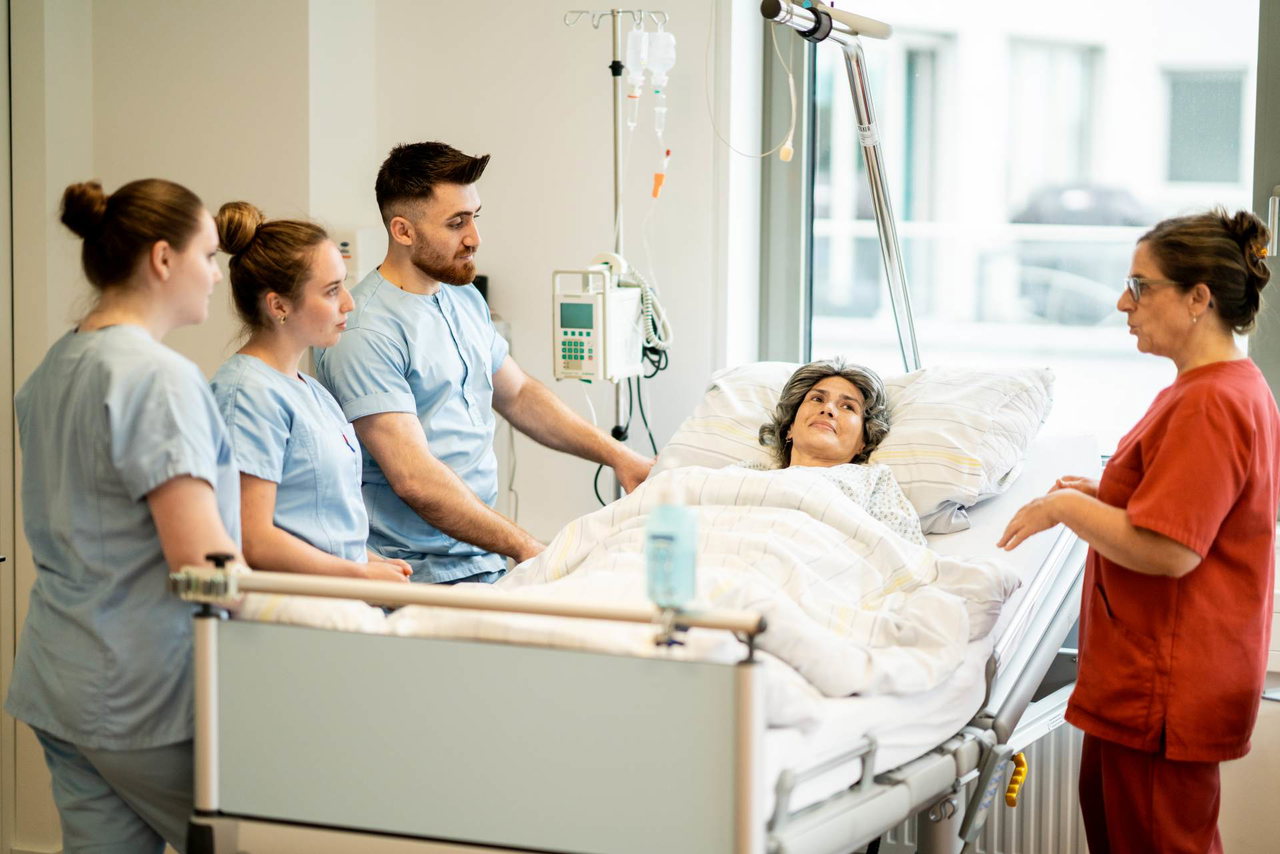
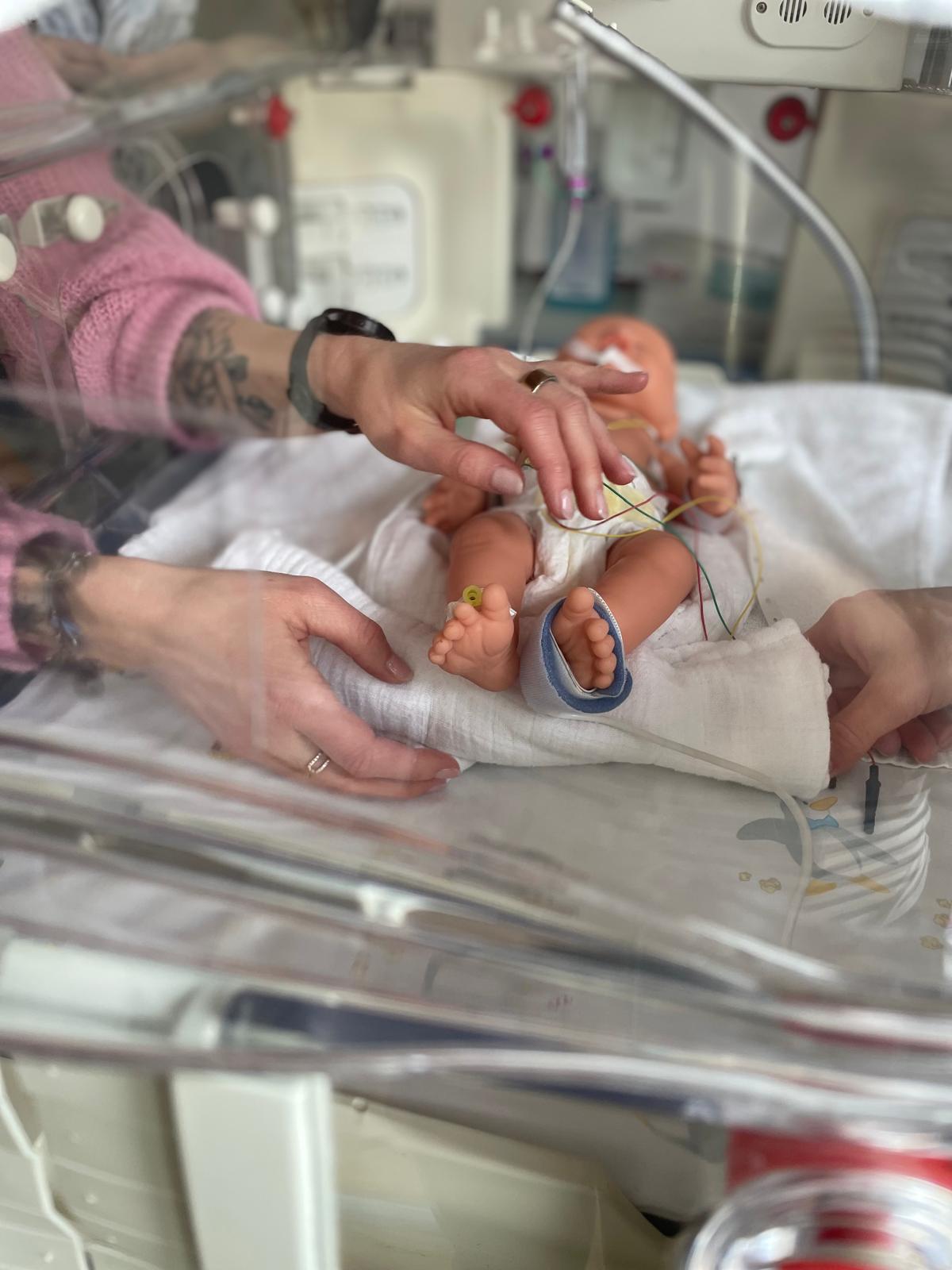
Mathilde is in her late seventies; she has grey hair, green eyes, soft skin, and several sites where nurses can administer injections and insert drips or drains. She speaks and groans – today, the high-tech simulation manikin, known as Mrs Ernst, is suffering from unexplained abdominal pain. An ultrasound scan failed to provide a reliable diagnosis, so students on the Bachelor’s degree programme in Radiological Technology are now set to perform a CT scan on Mrs Ernst. The group carries out the preparations with practised ease, but then it happens. After the patient has been given the contrast agent required for the scan, her circulation collapses and she loses consciousness. An emergency in which fifth-semester students must react quickly: What happened? What should they do?
“The contrast agent triggered an anaphylactic shock in the woman. A situation such as this can occur in a clinical setting on a daily basis,” says Christine Kern, Senior Lecturer. She regularly supervises students in the Skills Lab, used primarily by the Nursing degree programme, but also by the Occupational Therapy and Radiological Technology programmes.
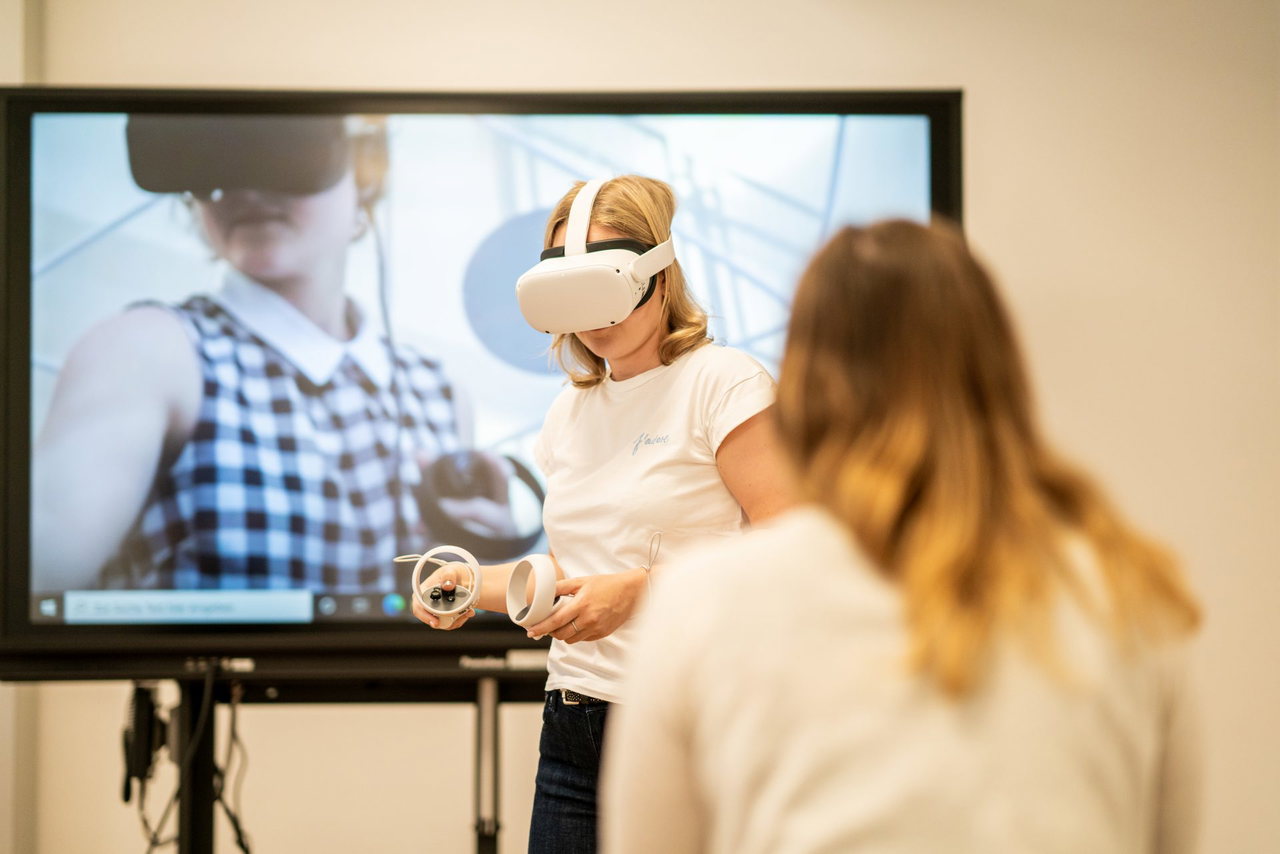
In the newly fitted-out rooms, students can practise routine and emergency situations under realistic conditions. The first few semesters focus primarily on practical skills – ranging from oral and personal hygiene and wound care to the handling of catheters, drains and infusions. Later, tasks become more complex, and students practise in small groups using simulation manikins or student actors. In another room, fellow students observe the trainees via video link; afterwards, they reflect on the session together and work on areas for improvement.
“Thanks to the Skills Lab, we can offer much more practical training using the same resources. We practise complex scenarios in a safe environment. This builds confidence and self-assurance,” says Babette Grabner, Head of Degree Programme Nursing. “During my training, I once took a blood sample from a colleague. Then came my first patient. I don’t know who was more nervous: him or me,” recalls Grabner, thinking back to her own training. Today, students practise much more before applying their knowledge in a clinical setting.
Interdisciplinary collaboration
This also involves working together with other healthcare professionals. “That is why we hold joint exercises with students from Paracelsus Medical Private University. This enables both sides to learn how to communicate and work together as equals in realistic treatment situations,” emphasises Grabner. The Orthoptics degree programme, for example, works closely with the SALK vision therapy centre. As part of a pilot project, four Radiological Technology students took over the PET-CT outpatient clinic at the University Clinic for Nuclear Medicine and Endocrinology for a day during the summer term – with such success that similar initiatives are already being considered for the future.
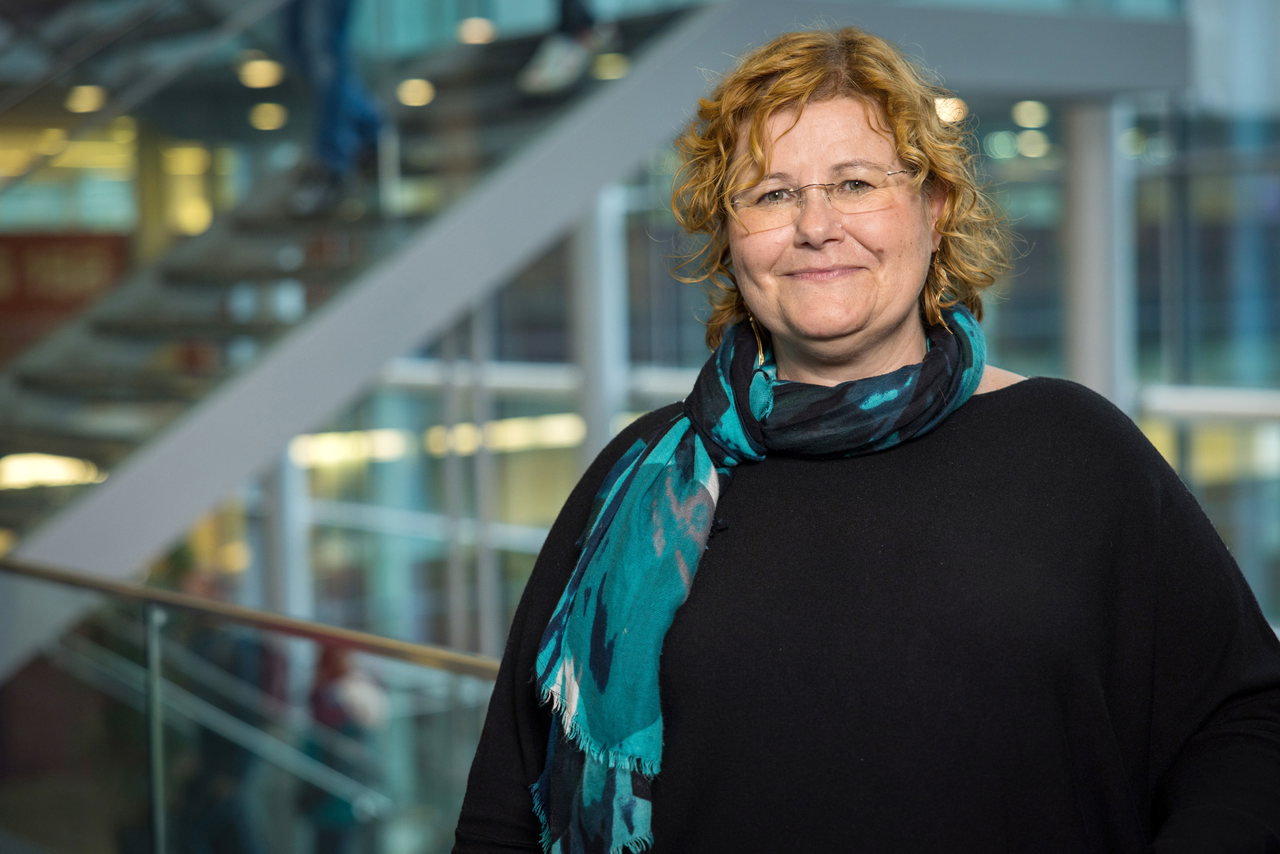
Babette Grabner, Head of Degree Programme Nursing
But Salzburg University of Applied Sciences also fosters close cooperation within itself. For example, a midwife and an occupational therapist also teach on the Nursing degree programme. Lecturers from the Biomedical Sciences programme teach modules in the Midwifery degree programme that cover blood parameters relevant to pregnant women.
“This interdisciplinary collaboration is very enriching. It also teaches you that you don’t have to be an expert in everything yourself, but rather where you can turn for answers,” says Geja Oostingh, Head of the Department of Health Sciences, with conviction. Particularly when it comes to teaching the fundamentals, such as hygiene or human biology, there is significant overlap in content across many degree programmes. Offering these subjects on an interdisciplinary basis brings many benefits.
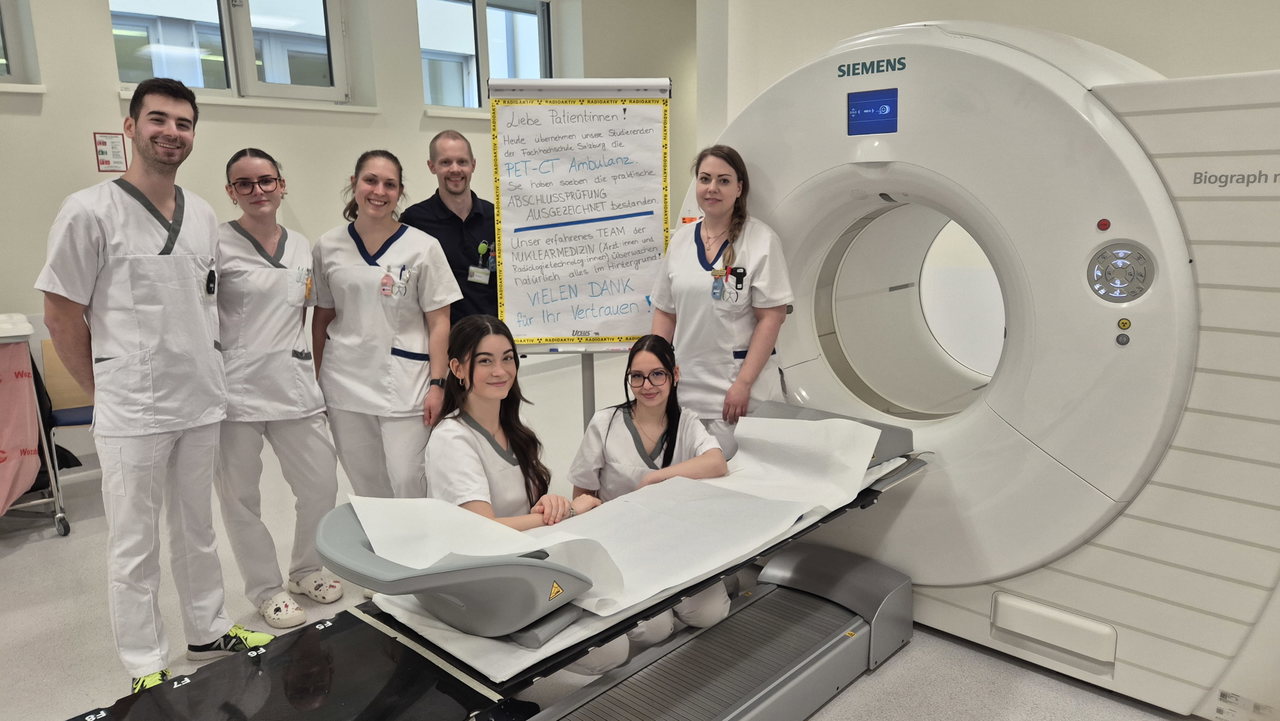
Pilot project: Radiological Technology students took charge of the outpatient department at the University Clinic for Nuclear Medicine and Endocrinology for a day.
Practising in virtual laboratories
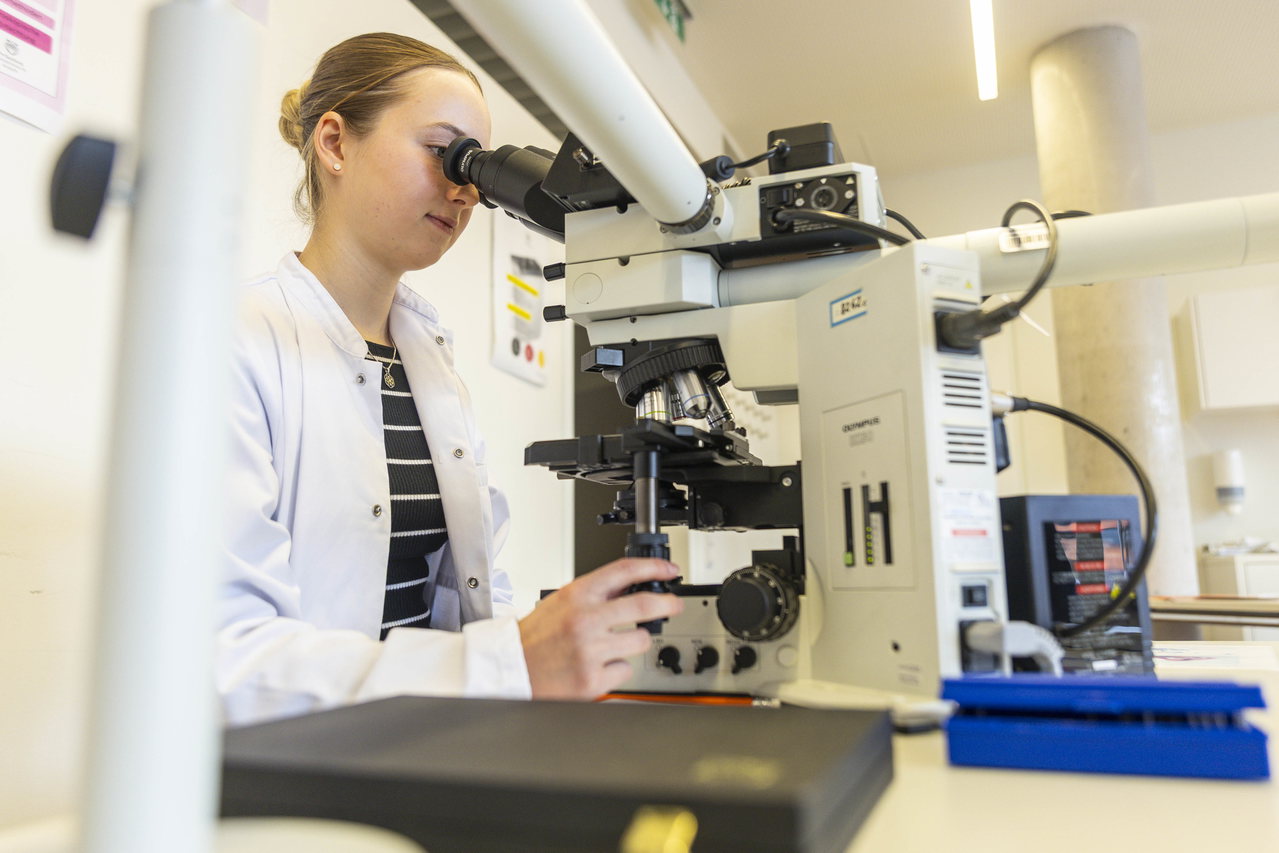
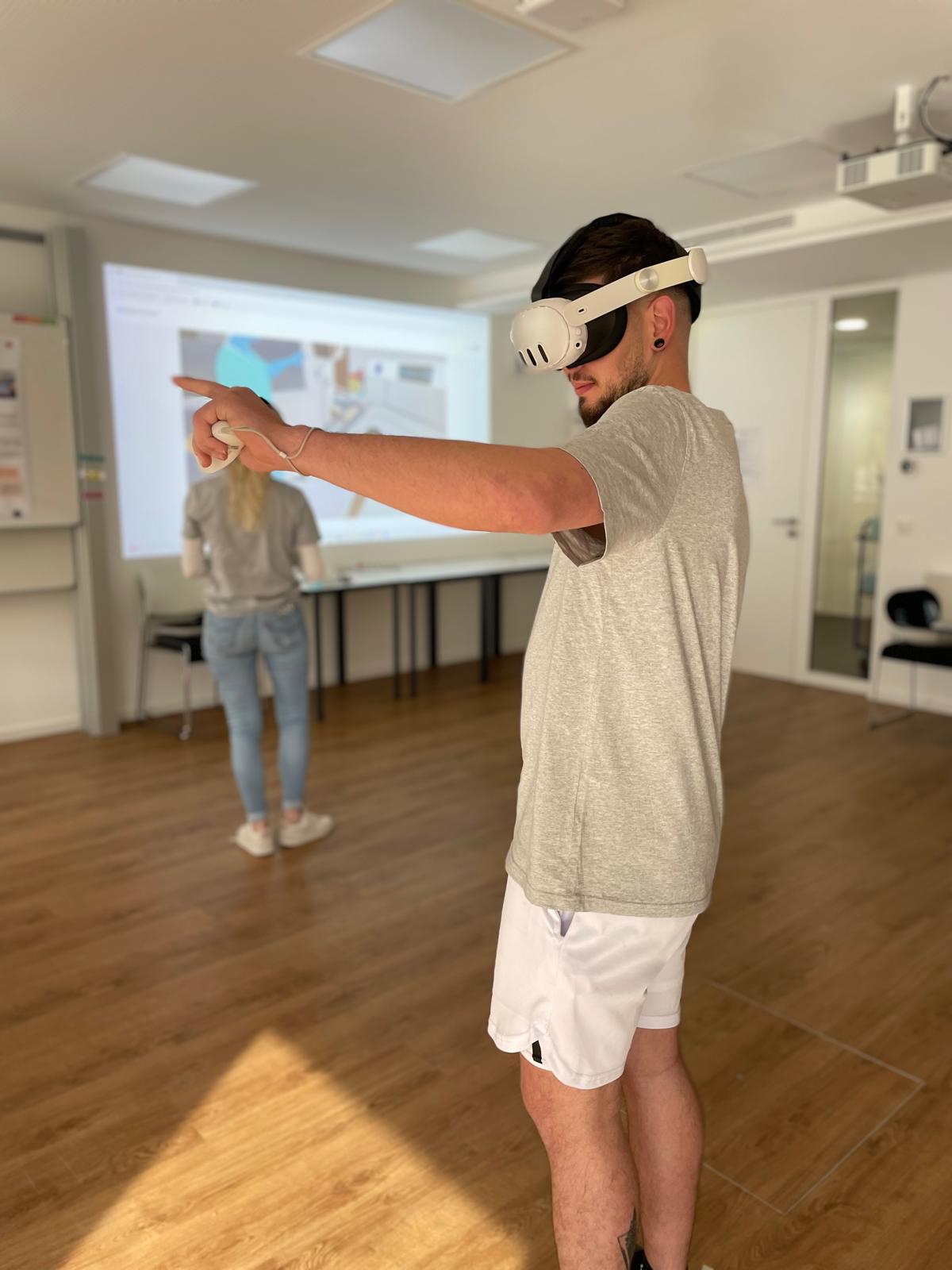
Digitalisation and AI are also giving teaching an innovative boost. In virtual laboratories, for example, students of Biomedical Sciences carry out gene sequencing. “In reality, such tests are far too expensive,” says Oostingh: “On the digital platforms, they can repeat the experiments as often as they like, which also helps them prepare well for exams.”
Growing through real-life situations
A dedicated skills lab is currently being set up for the Physiotherapy degree programme so that, from the summer semester of 2027, students can practise in small groups – from the initial consultation through to the treatment scenario – and thereby further their development. Head of Degree Programme Philipp Zunke emphasises the benefit of learning in a safe environment: “It’s OK to make mistakes.” One group practises whilst the other watches via video. Together, the students reflect on the situation and learn from it.
Incidentally, the Physiotherapy degree programme is a pioneer in this field: Salzburg University of Applied Sciences is the first university of applied sciences to have incorporated simulation into its physiotherapy curriculum, says Zunke, not without a touch of pride.
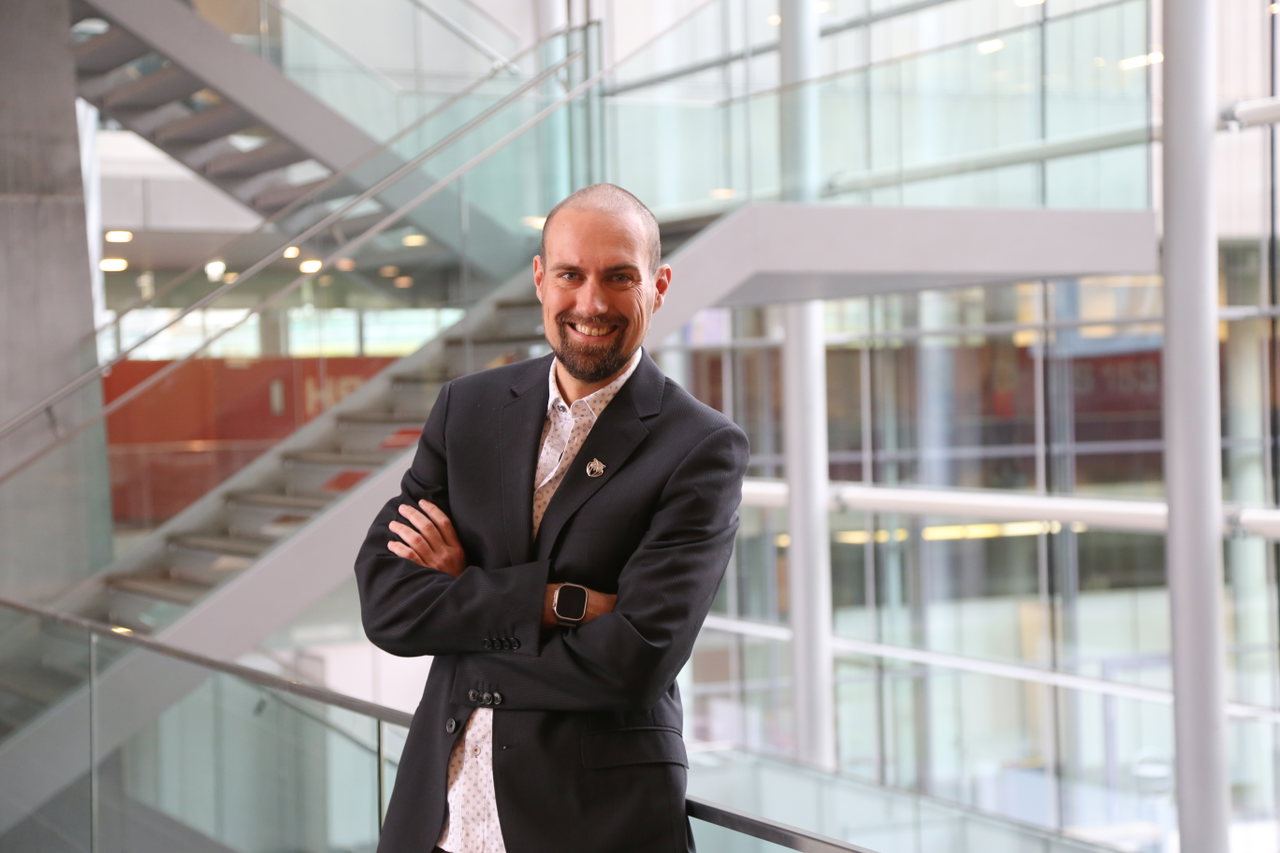
Philipp Zunke, Head of the Degree Programme Physiotherapy
New courses on offer
The University of Applied Sciences is also continually expanding its healthcare programme range: in autumn 2027, the Department of Health Sciences will launch the Bachelor in Speech and Language Therapy. A Master’s programme in Biomedical Technologies and Analytics, run in partnership with the University of Salzburg, is also planned for 2027. In the Department of Information Technologies, a joint Master’s programme with the PMU in Applied AI in Healthcare has just been launched – a topic currently the subject of intense debate in the medical field.

The magazine of FH Salzburg
Editor
Fachhochschule Salzburg GmbH
Salzburg University of Applied Sciences
University Communications & Marketing
Urstein Süd 1
5412 Puch/Salzburg
Austria
© 2026 Salzburg University of Applied Sciences GmbH