Research
Security under stress: How research makes cyberattacks visible
Cyberattacks have long been a reality. They are also increasingly threatening critical infrastructure such as energy supplies and industrial facilities. Using innovative test environments and practical research, researchers at FH Salzburg are working to identify vulnerabilities early and make systems more resilient.
“Our infrastructure is far more fragile than we realise,” emphasises Dimitris E. Simos. The computer scientist has been conducting research for around a year at the newly established Research and Transfer Centre for Cybersecurity at the IT Department. When it comes to critical infrastructure – such as the electricity or water supply – it is essential to address security issues in depth.
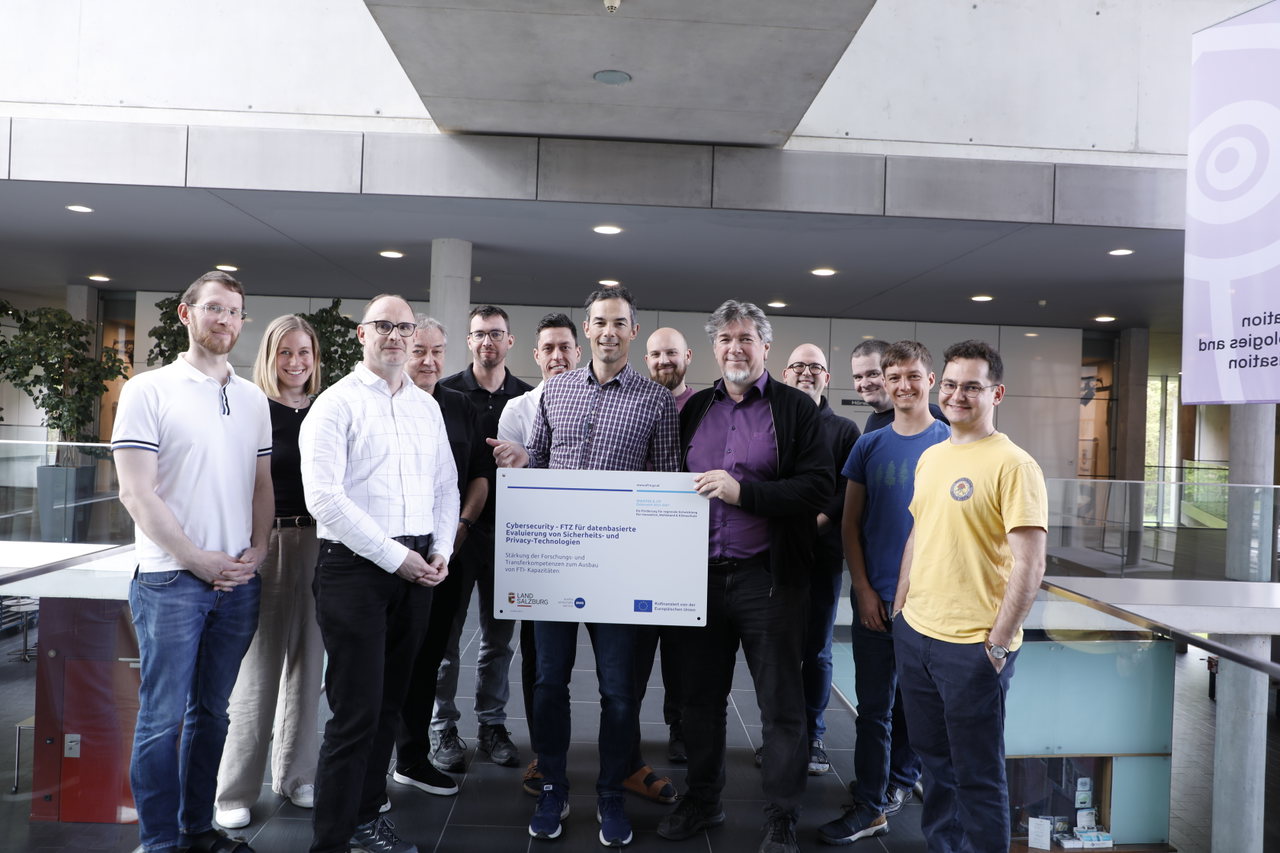
The team at the new Cyber Security Research and Transfer Centre (FTZ). The FTZ is funded by the European Regional Development Fund (ERDF) and co-financed by the Province of Salzburg.
The team at the Cybersecurity Research and Transfer Centre – officially launched in April 2026 and established by the FH Salzburg in collaboration with the University of Salzburg – is seeking to improve the overall system's security through simulated attacks. It focuses on methods of attack and defence against AI systems and on how to strike a good balance between the security and usability of digital applications.
Cyber Range as an attack test
A key element of this is the Cyber Range, a realistic testing and training platform that can be used to simulate cyber attacks and test defensive measures. The Cyber Range serves to identify vulnerabilities, test improvements and raise awareness of the threats posed by a hybrid world. The results of the research are efficiently collated and disseminated in a targeted manner to businesses, educational institutions and the public, so that they can be put to the most effective use in practice.
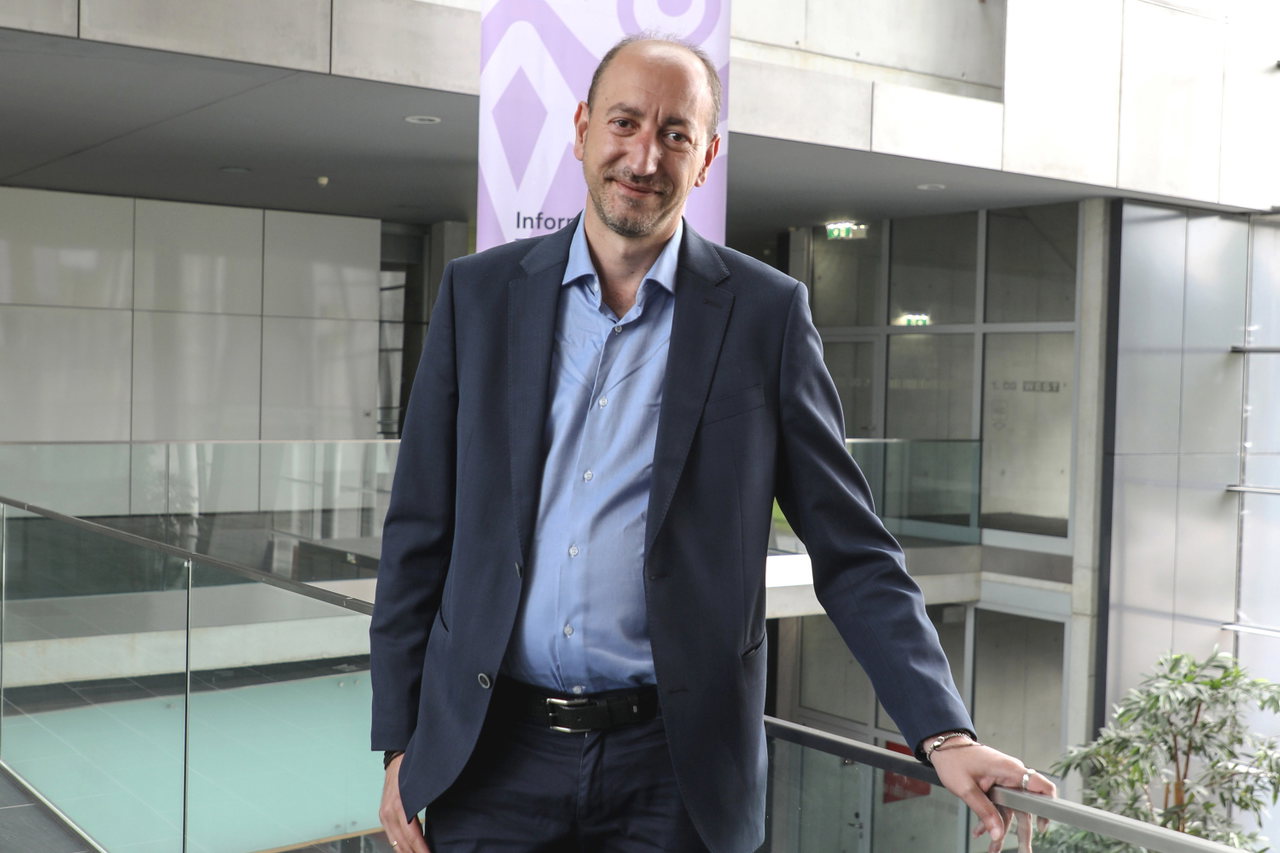
Dimitris E. Simos, Bridge Professor of Cyber Security.
About the person: Dimitris Simos
Dimitris Simos has been a member of the Department of Information Technologies & Digitalisation for around a year and is conducting research as a so-called "bridge professor" in cyber security at the newly established FTZ. The professorship was established as part of the Province of Salzburg's EXDIGIT initiative and is a joint appointment with the University of Salzburg.
Simos teaches in the Bachelor’s degree programmes and the Master’s degree programme Cyber Security. His research focuses on the methodological foundations for secure IT systems, with an emphasis on automated testing, mathematical modelling and reliable IT architectures. With over 150 academic publications to his name, he is recognised internationally as one of the leading figures at the interface between mathematics, computer science and IT security.
A testing ground for Industry 4.0
A realistic test environment is also at the heart of the Josef Ressel Centre for Intelligent and Secure Industrial Automation (JRZ). This ‘testbed’ consists of a closed production system comprising three injection moulding machines, which can be used to trial innovative system architectures, artificial intelligence and security solutions. This experimental facility, featuring real-world components, was developed in close partnership with industrial companies and brings together experts from the fields of mechatronics, control engineering, security, artificial intelligence, machine learning and traditional computer science to work on projects. This gives rise to innovative approaches such as digital assistants that operate more efficiently through reinforcement learning.
Put simply, the JRZ is working on the next stage of industrial automation: digital assistants that control and monitor industrial machinery which operates entirely without human intervention. To achieve this, not only are appropriate system architectures and a great deal of artificial intelligence required, but also effective protection against cyber-attacks. According to recent research, almost one in five cyber-security attacks targets operational technology systems.
"Cybersecurity is no longer just an IT issue, but an integral part of modern production systems."
Stefan Huber · Head of the JRZ
Attacks that utilise artificial intelligence, in particular, have long been ubiquitous and are becoming the norm – not just in industry. This makes it all the more important to use innovative approaches to increase the resilience of automated industries.

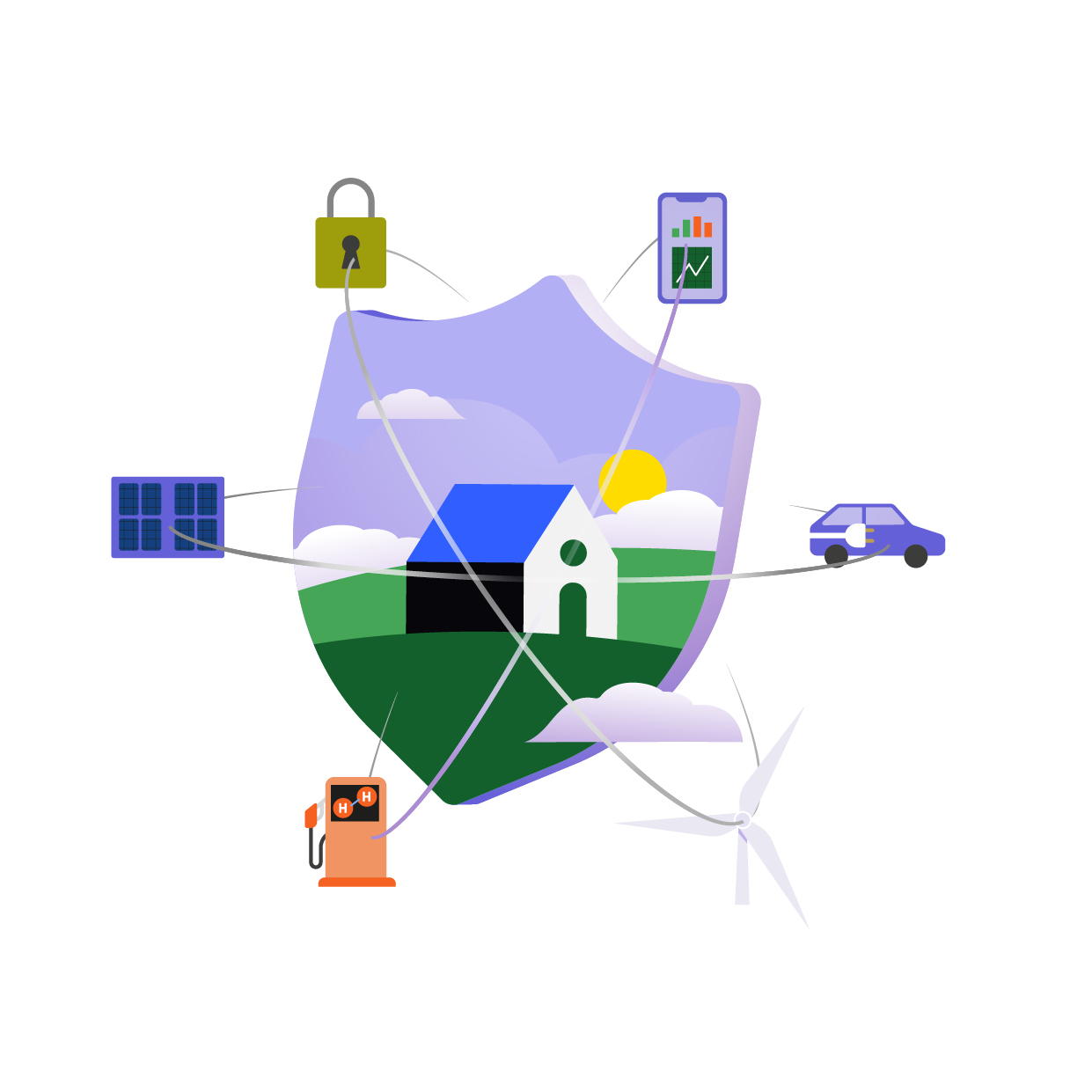
©Birgit Palma & Daniel Triendl
Protecting infrastructure
FH Salzburg has many years of expertise in research on smart grid operations and data security. As early as 2013, there was a Josef Ressel Centre for application-oriented smart grid privacy, security and control – at a time when the topic was nowhere near as much in the spotlight as it is today.
As its successor organisation, the Centre for Secure Energy Informatics (ZSE) is now focusing on methods for using artificial intelligence to better predict generation and consumption within the energy system. At the same time, the work involves ensuring the responsible handling of sensitive data relating to private energy consumption.
The research project "Prismatics" (Privacy and Security for Modelling and Assessing Threats to Industrial Complex Systems) addresses this issue precisely. Project leader Günter Eibl and his team are investigating how to extract as much information as possible from datasets – such as those collected by smart meters – for grid operation, without compromising the necessary data protection. The efficient use of existing data and security must not be mutually exclusive. To improve the systems, the Prismatics team is working, amongst other things, on privacy attacks. “These serve to highlight vulnerabilities and further develop methods,” explains Eibl.
More about the research

The magazine of FH Salzburg
© 2026 Fachhochschule Salzburg GmbH · fh-salzburg.ac.at