Cover story
Key theme: Security
Security as a currency in society
Security is a perennial issue in our society – whether it concerns infrastructure, energy, IT or communications. Salzburg University of Applied Sciences possesses a high level of expertise across a wide range of security-related areas – knowledge that benefits students, industry partners and society as a whole.
A cyberattack that paralyses an industrial company’s production. A phishing email that causes a family to lose their savings. Drones controlled by artificial intelligence that spy on sensitive facilities, targeted fake news that can influence democratic elections, or a blackout that cuts off the power supply across vast areas. At a time when physical and digital systems are becoming increasingly intertwined, our vulnerability is growing. The scope for perceived or real threats has increased enormously in recent years. Innovative technologies, digitalisation and artificial intelligence open up undreamt-of possibilities, but also harbour many new risks. Cybersecurity is just one example. Knowledge is needed to deal responsibly with both the opportunities and the dangers.
With its wide-ranging departments – from Information Technologies and Digitalisation to Applied Social Sciences – FH Salzburg possesses extensive expertise in areas relating to individual or collective security. Through its research and teaching, the university has built up a wealth of expertise in cybersecurity, energy security, secure industrial automation and the strengthening of democratic structures.
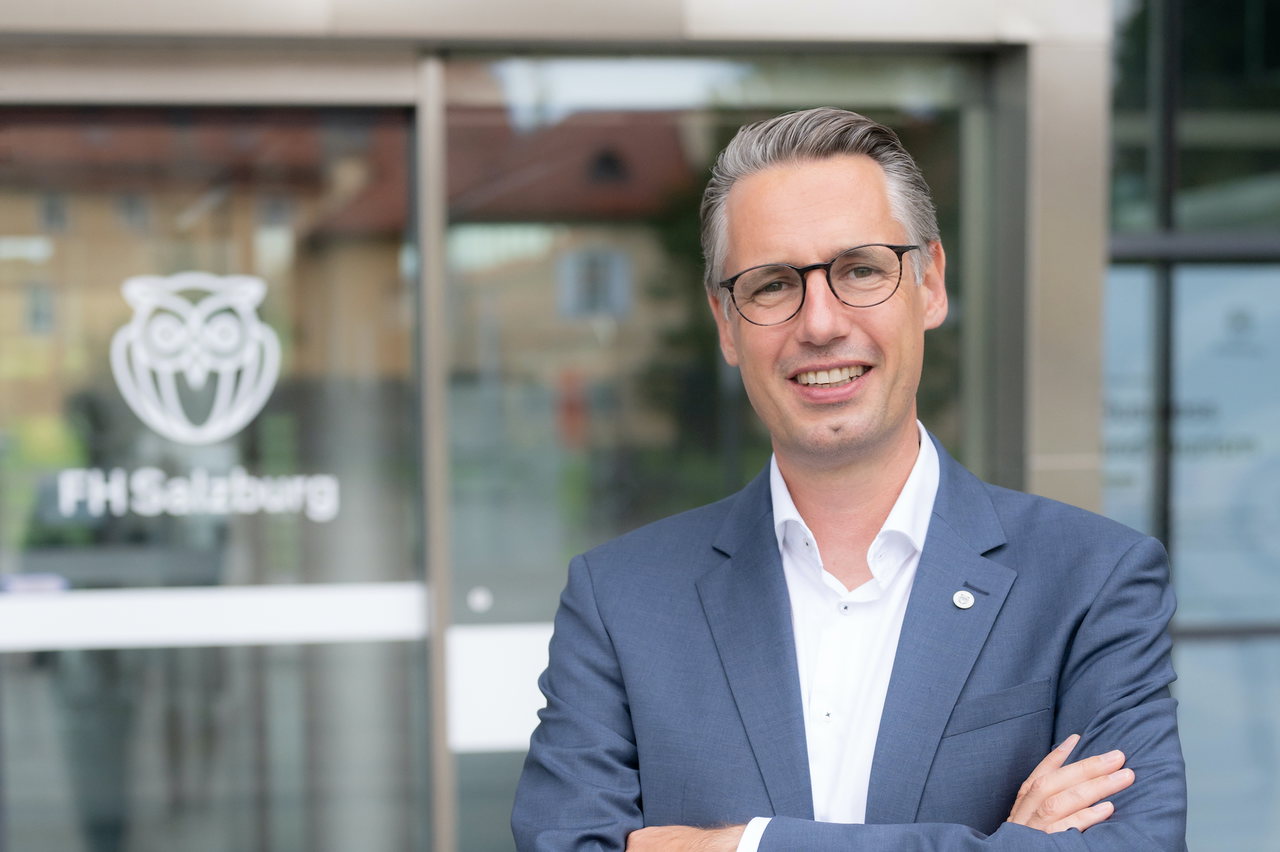
Dominik Engel · Principal and Managing Director
“Security cannot be taken for granted; we are reminded of this every day in many areas of our lives. Through our research and teaching, we aim to help make infrastructure, the economy, society, health and social care systems – as well as our democratic structures – more resilient to potential threats.”
The breadth of subject areas at FH Salzburg facilitates interdisciplinary collaboration, thereby opening new perspectives that lead to many innovative approaches and solutions.

Democratic literacy boosts resilience
If we only ever discuss issues within our own bubble, our perspective narrows and our positions become more entrenched. This weakens democratic structures and destabilises social cohesion. The Department of Applied Social Sciences, along with the Social Work and Social Innovation degree programmes, has for many years been exploring how democracy education can be improved through information, workshops or interventions, thereby strengthening the resilience of as many people as possible against disinformation and extremism. “We must be aware that technology is not just a tool, but also a social actor,” says Katrin Rossmann, for example, whose area of expertise is machine ethics. For her, education is key to engaging critically with new technologies from the perspective of humanist values. This is an attitude that FH Salzburg instils in its students, thereby exerting a far-reaching influence on business, politics and society.
Interdisciplinary strength
The teaching and research projects presented in this ePaper help to better protect energy and data systems, identify vulnerabilities through simulated cyber-attacks, and contribute to the development of innovative test environments for the secure design of Industry 4.0. Furthermore, the chapter about democracy and security demonstrates how fake news and digital disinformation can be detected, and explains why education and democratic literacy are crucial to strengthening societal resilience.
A wide variety of disciplines are working together to find solutions for a secure and responsible digital future.
Interview with Katrin Rossmann
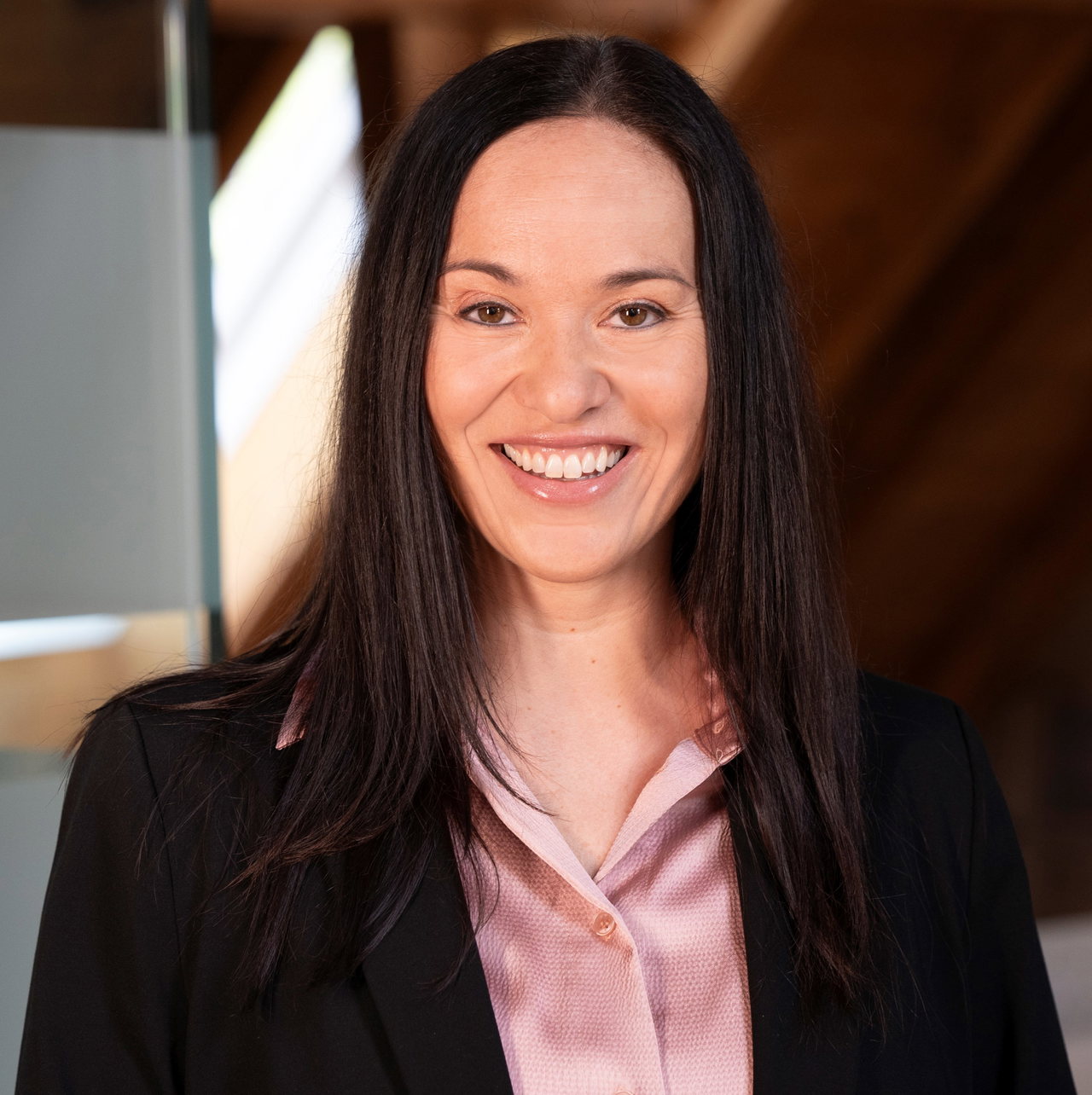
“We must not let machines take over our thinking”
Technical systems are never neutral. That is why it is important to take ethical considerations into account when developing them. Is everything that is technically possible also permissible? Katrin Rossmann is a social scientist who teaches Machine Ethics in the IT Department.

The magazine of FH Salzburg
© 2026 Fachhochschule Salzburg GmbH · fh-salzburg.ac.at