Democracy & Resilience
Uncertainty is a breeding ground for populism
Extremism and authoritarianism pose a threat to democracy. Markus Pausch, Senior Researcher at the Department of Applied Social Sciences, is convinced that, as a counterbalance, it is important to strengthen democratic literacy amongst the population.
Democracy education can begin as early as nursery school. For example, when Kasperl, in his battle against Populistifax, helps those who would otherwise have no voice. Markus Pausch is certain that anyone who has experienced first-hand that it is possible to counteract injustices and bring about positive change is less susceptible to the temptations of populism and extremism. For the political scientist, strengthening each individual’s democratic competence is crucial to safeguarding human rights, freedom of the press and freedom of expression, and free elections in the long term.
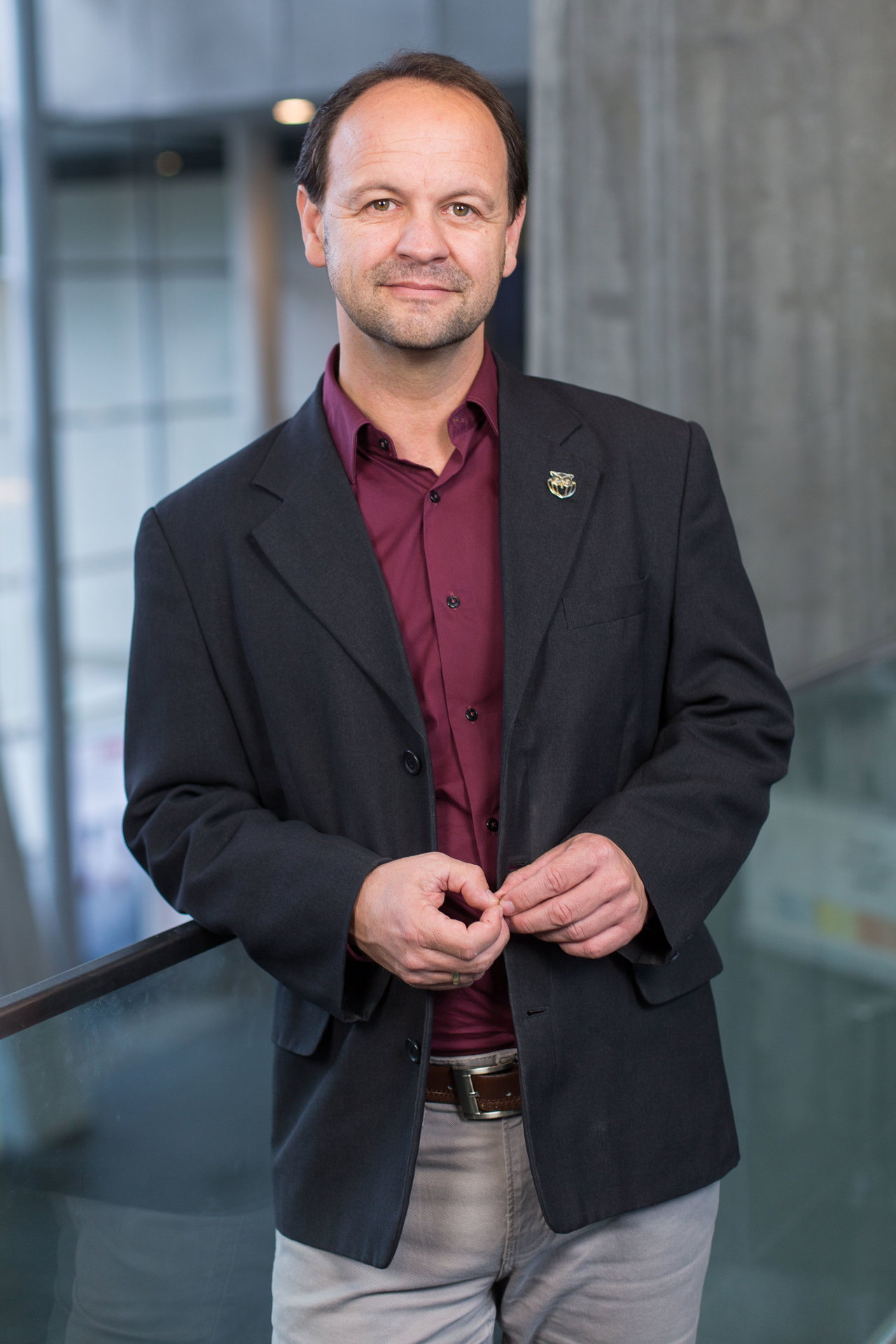
Markus Pausch conducts research into democracy and resilience at Fachhochschule Salzburg.
"Children have a strong sense of justice."
Markus Pausch
Promoting democratic literacy
Democracy cannot be taken for granted; it must be brought to life and defended every single day. The Department of Applied Social Sciences, which offers the Master’s programme in Social Innovation, has built up a wealth of expertise in recent years through research and international collaborations. Among other things, it has produced the handbook ‘Democracy Education against Anti-Democratic Tendencies’ in collaboration with partners from several European countries.
Extremism and authoritarianism as threats
Broadly speaking, the expert identifies two sources of threat to the security of our democracies: extremism and authoritarianism. Whilst extremism often arises covertly within society, authoritarianism manifests as the gradual curtailment of rights and the erosion of democracy within the political system – as was the case in Hungary under Viktor Orbán.
"Since 2005, we have seen a wave of autocratisation and a decline in democracy in the Western world."
Markus Pausch
It works according to the same principle every time: political opponents are denied legitimacy, the media are criticised as the “lying press”, whilst at the same time false reports or half-truths are deliberately used to stir up public sentiment. “Donald Trump talks about ‘fake news’ and by that he means media outlets such as CNN or the Washington Post,” says the expert. The independence of the judiciary is also called into question.
Prevention is intended to build resilience
Insecurity – often fuelled by real or exaggerated threats such as economic downturn, unemployment, migration, pandemics or terrorism – is the breeding ground on which populist movements thrive. They promise to restore security through simple solutions. However, if one looks at the objective data, there is no less security in Austria than there was.
The "SHIELDed" research project (Building safer communities through inclusion, awareness and cooperation), in which FH Salzburg is collaborating with partners from Germany, Poland, Portugal, France and Italy, is examining how vulnerable places such as schools, religious or cultural institutions can be better protected against hate and violence – and is bringing together public authorities, educational institutions and religious communities to counter radicalisation.
Making a big difference in small ways
It is always about viewing the world through the lens of democracy and experiencing a sense of self-efficacy, says Pausch. Resilience in the face of anti-democratic processes also arises when people champion justice, participation and freedom of expression in their own small spheres. “I can’t save the world with this,” he says realistically. But if many people and organisations work to strengthen democracy on a small scale, this can bring about significant change.
What does security mean to you personally, Markus Pausch?

The magazine of FH Salzburg
© 2026 Fachhochschule Salzburg GmbH · fh-salzburg.ac.at