On the Path to a Climate-Neutral University
In recent months, Salzburg University of Applied Sciences has been working intensively on its sustainability strategy. One key reason: tomorrow’s decision-makers, who are being educated here, should be equipped for a climate-neutral future. They need to be able to shape the necessary transformation process actively.

Burying our heads in the sand is not an option given the impacts of the climate crisis. “We must proactively embrace the transformation towards ecological, social and economic sustainability,” says Daniela Molzbichler, Sustainability Officer at Salzburg University of Applied Sciences. She is passionately committed to sustainable development. Together with the FH faculty team and the Taskforce Sustainability, she has spent the past months developing a comprehensive sustainability strategy for the university.
“As a university, we have a special responsibility. We educate tomorrow’s decision-makers. We can only do this credibly if we truly live sustainability in all areas,” explains Dominik Engel, Rector and Managing Director of FH Salzburg, underlining why the topic is so important to him. The goal is clear: “We want to become a climate-neutral university and thus fulfil our pioneering role,” Engel states.
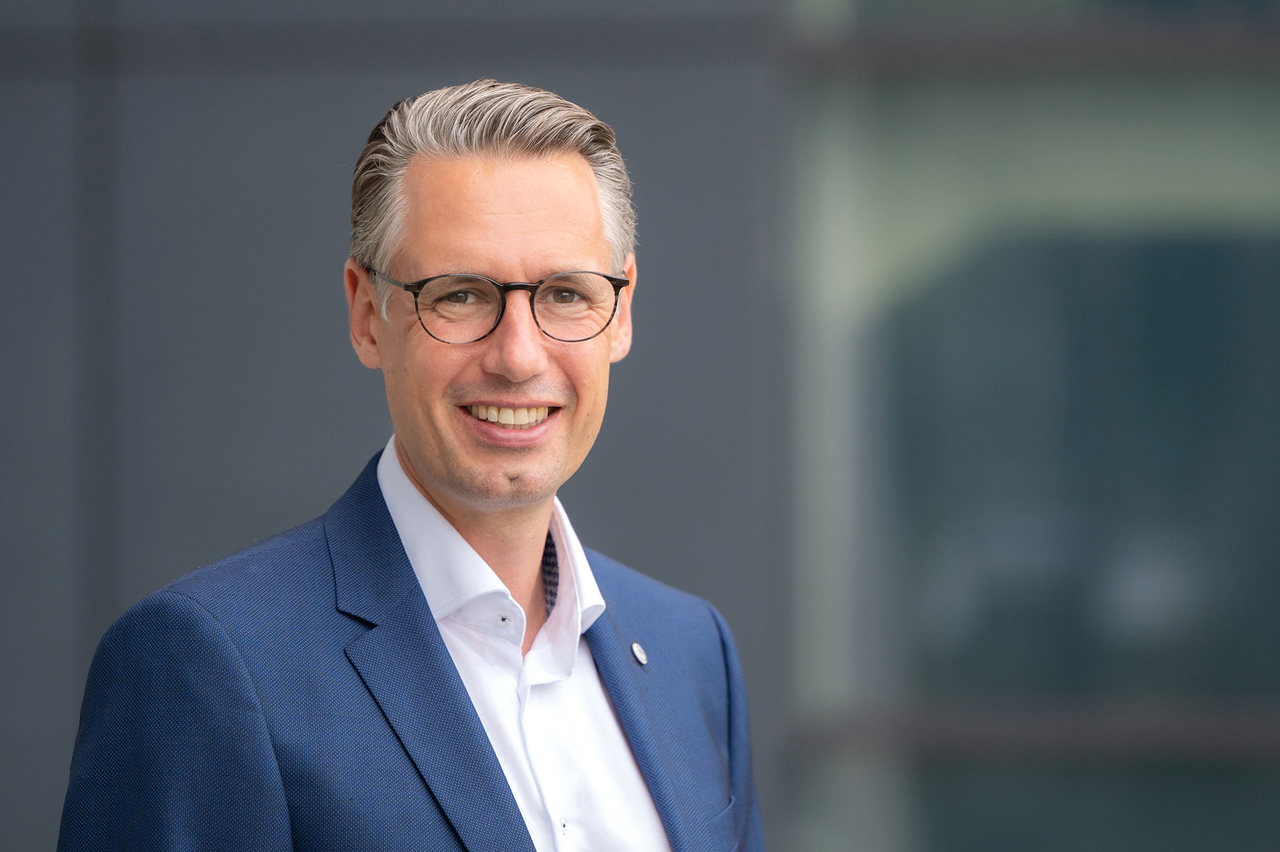
„Wir wollen eine klimaneutrale Hochschule werden und damit unserer Vorreiterrolle gerecht werden“
Dominik Engel
Learning from Each Other in Networks
The foundation of FH Salzburg’s sustainability strategy is the 17 United Nations Sustainable Development Goals (SDGs), as well as national and international standards and implementation guidelines. With these efforts, FH Salzburg is part of a large network. It is the only Austrian university of applied sciences to be a member of UniNEtZ II (2022–2025), an alliance of scientists, artists and students committed to transforming universities into drivers of societal sustainability. Since 2024, FH Salzburg has also been a member of the Alliance for Sustainable Universities. These networks aim to learn from each other and advance the topic together.
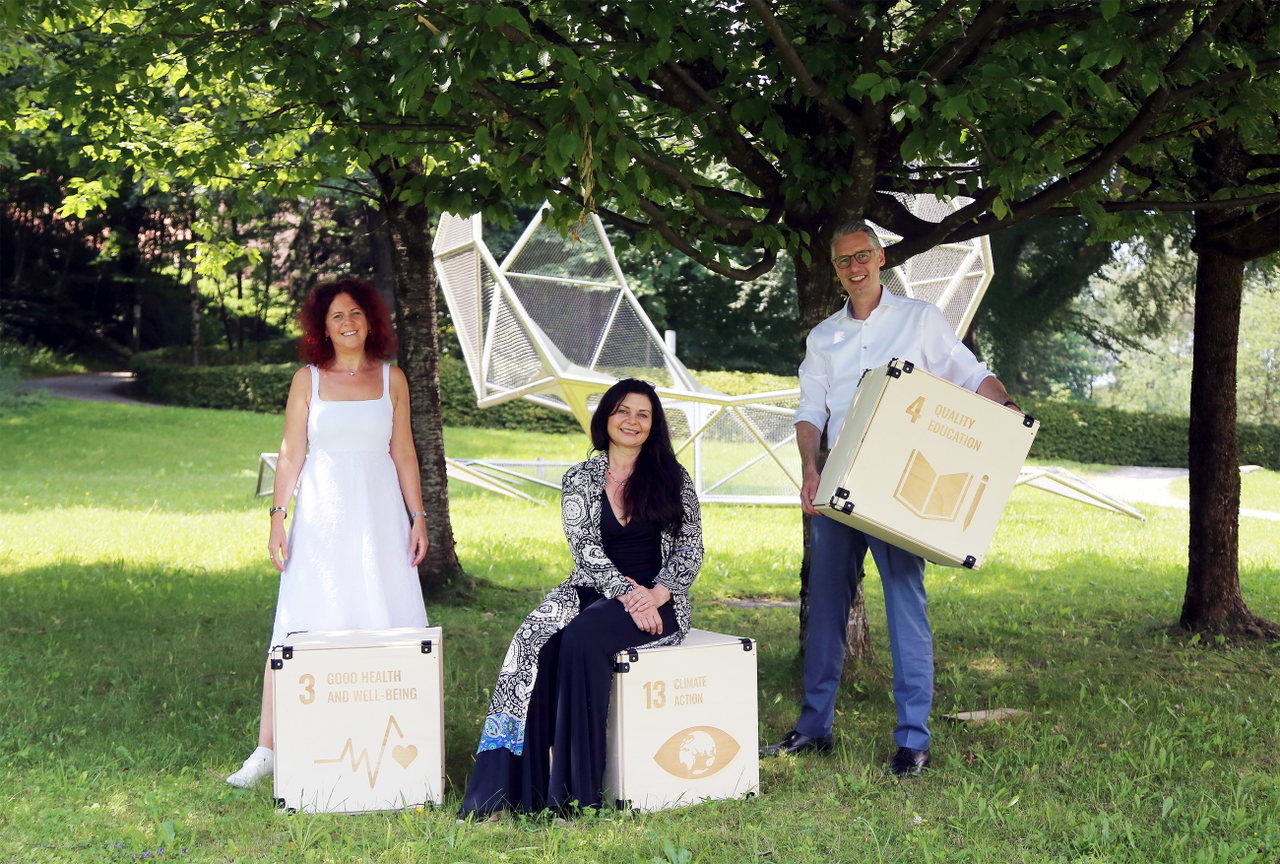
FH Salzburg is a member of the Alliance for Sustainable Universities in Austria (BNH). In the picture: Chair of the Alliance for Sustainable Universities Elisabeth Steiner (FH Campus Wien), FH Salzburg Sustainability Officer Daniela Molzbichler, FH Salzburg Rector and CEO Dominik Engel.
Six Fields of Action
FH Salzburg has defined six fields of action with goals to be achieved by 2030:
Teaching and Learning for Sustainable Development
Strengthening Sustainability-Oriented Research
Campus Vision – Student Edition
University Operations and Mobility
Sustainability in People & Culture
Communication for Sustainable Development
These areas involve diverse challenges, from reducing CO₂ emissions to fair procurement, equal treatment and diverse teams. “We have a strong foundation to build on,” says Molzbichler proudly. Sustainability is already well integrated into teaching. For bachelor students, the annual symposium “Change.Climate.Resilience” is organised, reaching over 400 first-year students this November. For master’s students, the “Ethics & Sustainability” format supports interdisciplinary exchange. In addition, a scholarship funded by the Salzburg Chamber of Labour promotes bachelor’s and master’s theses on sustainability topics. But there is more to do: one of the strategy’s goals is that, in the medium term, every curriculum should include a certain number of ECTS credits related to sustainability.
Research for Sustainable Solutions
Research priorities in the departments – Applied Health Innovation, Future Service Industries, Human-Centred Technologies & Design, Social Innovation and Sustainable Materials and Technologies – focus on developing innovative and sustainable solutions. These research topics are closely linked to teaching and offer students opportunities to participate in selected interdisciplinary projects. The aim is to further expand existing expertise and leverage synergies between research and education.
Priority for Cycling, Bus and Rail
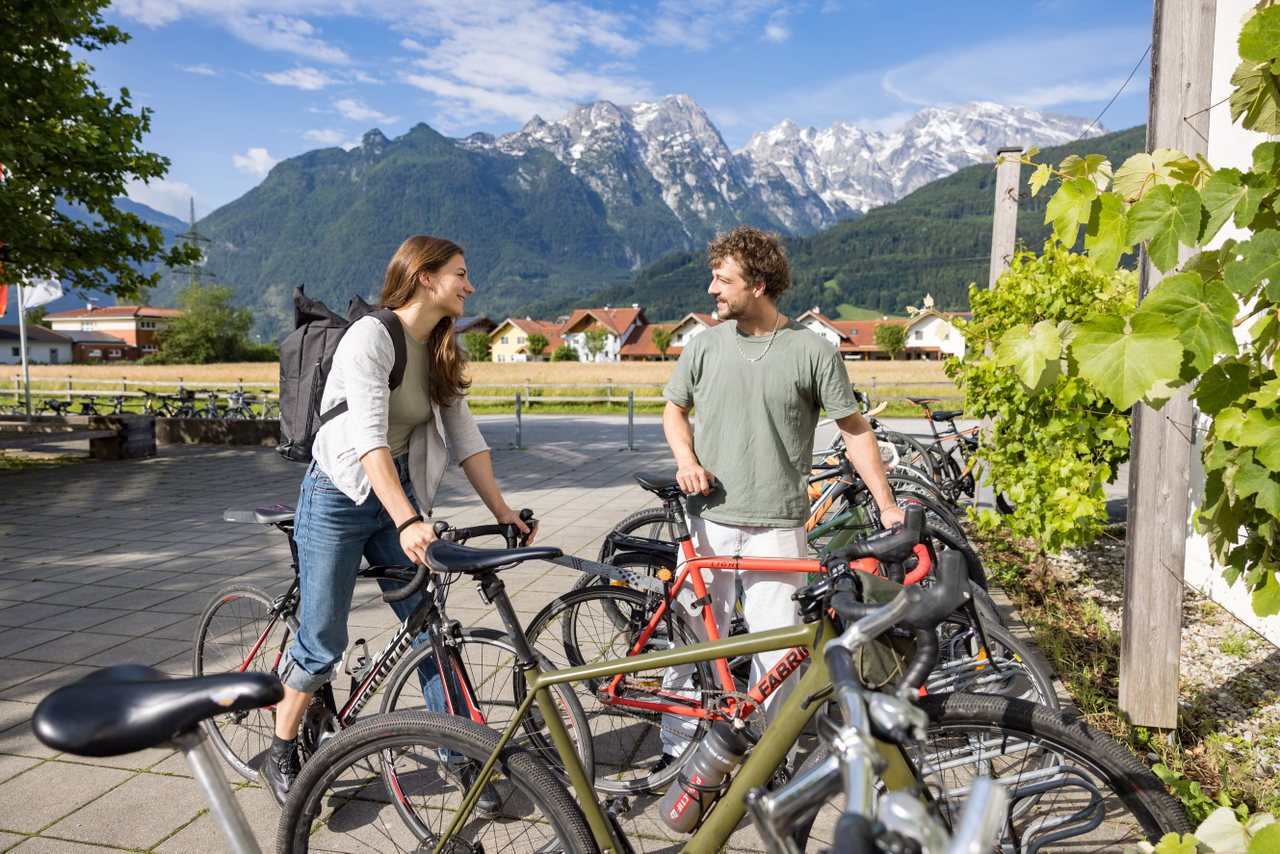
Energy from renewable sources – part of the University Operations and Mobility field – has increased significantly in recent years. The potential for photovoltaic systems on FH buildings has already been largely exploited. However, there is still much to do regarding mobility. A survey among staff, students and external lecturers showed that in the summer semester, nine per cent of staff and lecturers and six per cent of students used bicycles for commuting to FH Salzburg. Public transport is used by 38 per cent of students, 32 per cent of staff and 24 per cent of external lecturers. There is still considerable potential here. Studies and analyses consistently show: mobility is a key lever for achieving climate neutrality – including for universities.
Strong Student Involvement
Students have their own chapter in the sustainability strategy to define their priorities. In addition to mobility, social aspects and mental health are also in focus.
Sustainability Only Works Together
FH Salzburg also has an important role model function, Engel is convinced: “We will only achieve long-term success if everyone feels responsible for the transformation towards ecological, social and economic sustainability.” The changes defined in the strategy must be brought to life every day. In November, all staff and students had the opportunity to contribute their ideas and wishes to the sustainability strategy during the Greenovation Summit. More than 400 students and around 200 staff members actively participated. The strategy, which sets out goals until 2030, will be published in spring 2026. The first sustainability report, showing current strengths and challenges based on key figures, is being prepared for the 2024/25 financial year.
Glossary of Sustainability Terms

At Salzburg University of Applied Sciences, we understand sustainability as a cross-cutting theme that shapes all areas of our actions: from teaching and research to campus life. To ensure we all pull in the same direction, it is important to define key terms clearly. This glossary provides an overview of the core concepts guiding our sustainability strategy. It shows how these terms are interconnected and what their focus is.
Connections at a Glance
Sustainability = Goal/State → systems that are viable in the long term
Sustainable Development = Process/Means → measures to achieve sustainability
ESD = Education for Sustainable Development → empowers people to take action
GCE = Global Citizenship Education → empowers people to act responsibly and fairly on a global scale
Sustainability
Meaning: A state in which natural, economic and social systems are viable in the long term.
Focus: Goal/State – Where do we want to go?
(Source: Brundtland Report, 1987; Kates et al., 2005)
Sustainable Development
Meaning: A process aimed at achieving this sustainable state.
Focus: Action/Process – How do we get there?
(Source: Brundtland Report, 1987; Sachs, 2015)
Education for Sustainable Development (ESD)
Meaning: Education that imparts knowledge, skills and values to actively shape sustainable development.
Focus: Action/Process – How can people contribute to sustainability?
(Source: UNESCO, 2014; Wiek et al., 2011)
Global Citizenship Education (GCE)
Meaning: Education that enables people to act as globally aware citizens and address global challenges responsibly.
Focus: Attitude & Action – How can I act sustainably and fairly as a global citizen?
(Source: UNESCO, 2015; Oxley & Morris, 2013)